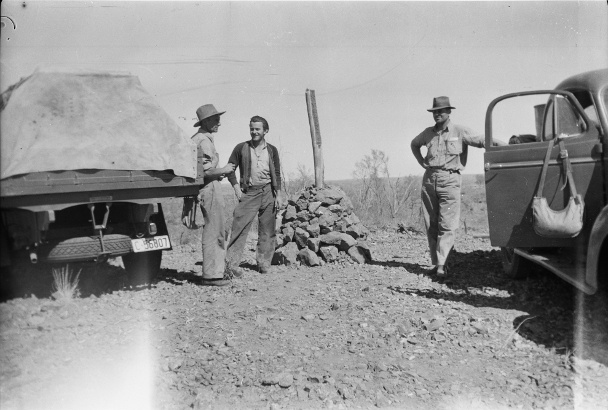
Figure 6. Charlie Simmons, Don McKay and Dick
McBride at Mount Hogarth, NMH33, Sandover
River country, 1948.
|
Transport
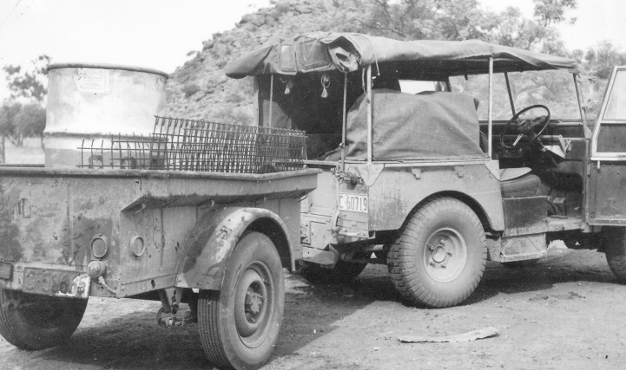
Years ago I heard this story in the Territory about the man from down south who asked an old blackfellow how far it was to the homestead. "It all depends" was the careful reply, "if you foot walk it's a long way; if you horse ride it's not so far; but by crikey, in a motor car you're there already"! Maybe so, or nearly so, but that same motor car could have been bogged in the very next creek until pulled out by the blackfellow with his horses. These days it is hard to imagine the difficulties experienced in getting 4-wheel drive vehicles for off-road survey work. The 2-wheel drive Chev 1 ton truck did over 20,000 km during the 6 months 1948 field season with more than half this distance being either over rough bush tracks or off the track. Much trouble and many delays were caused by bogging in sand or mud, broken springs, engine failures and of course punctures particularly towards the end of the field season when the tyres were wearing thin. After bashing out northwest of Tennant Creek through fire burnt scrub a brief, one line restrained diary entry for a really bad day reads: "Five punctures in a mile. No Observations!" Another factor which sometimes caused either delays or changes to the field work programme was the need for petrol coupons in Queensland during 1948-49 because the monthly ration of 200 gallons was often late coming from the Canberra transport depot. With two survey parties in the field for the 1949 season, two new 25 cwt, 4-cylinder, 14 HP Commer trucks were provided and in addition a 1942 Ford Jeep and trailer which looked as though it had done a lot of hard work. Nevertheless, it was 4WD and after the worries of the previous season it was good to have more than one truck in the party. Figure 7. The extra vehicle paid off during a particularly hard, rough trip in the Gulf country from Borroloola to Burketown going east via Robinson River and Calvert Hills and returning nearer the coast via Pungalina and Seven Emus where, according to Jack Keighran it was the first time motor vehicles had travelled between these two homesteads. We had the advantage of having an aborigine named Donegan, who was at one time a police "boy", join the party for nine weeks in this area. Figure 8. Donegan saved the field party much time and trouble as he knew the coastal country thoroughly and we were able to follow the old wagon tracks, main pads and on the way he provided names of waterholes, wells, yards and other landmarks. In spite of picking the best track with the Jeep towing the Commer through some of the bad stretches, the gear box on the Jeep eventually failed at the Wearyan River 65 km east of Borroloola. The party was able to continue in the Commer to Tennant Creek where a new gear box airfreighted from Melbourne was collected. Returning to the Wearyan the old gear box was replaced and the Jeep "back on the road" three weeks and 1500 km after the breakdown. |
A marked improvement occurred in the transport supplied for the 1950 season with two new International KB5 trucks and two new short wheel base 4WD Land Rovers and trailers being shared between the two field parties, each of three men. These new vehicles performed well that year and again in 1951-52 when there were four observing parties, with the Internationals going only as far off the tracks as was reasonable and being used as supply bases with two Land Rovers and trailers working out from each International - a most satisfactory arrangement. 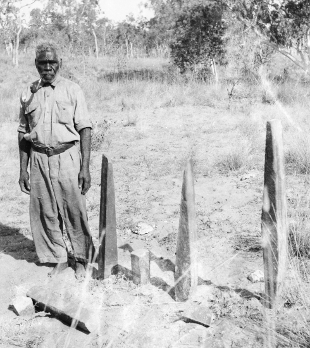 Figure 8. Donegan alongside some unusual stones near Karns Creek northeast of Calvert Hills H.S. The local aborigines said "They grew there!" In 1951 the Natmap survey party caused a mild sensation in Alice Springs arriving in town with big 900 x 13 tyres fitted to some of the Land Rovers. Figure 9. These tyres which ran at a low 8 pounds per square inch pressure meant that with the strips of ARC mesh carried in the trailers the parties could go just about anywhere off the road, however, after a while these large low pressure tyres caused severe wheel wobble particularly on the bitumen and while still excellent in the sandridge country eventually caused serious damage to the steering and were discarded during the following year in favour of the 750 x 16 tyres. |